
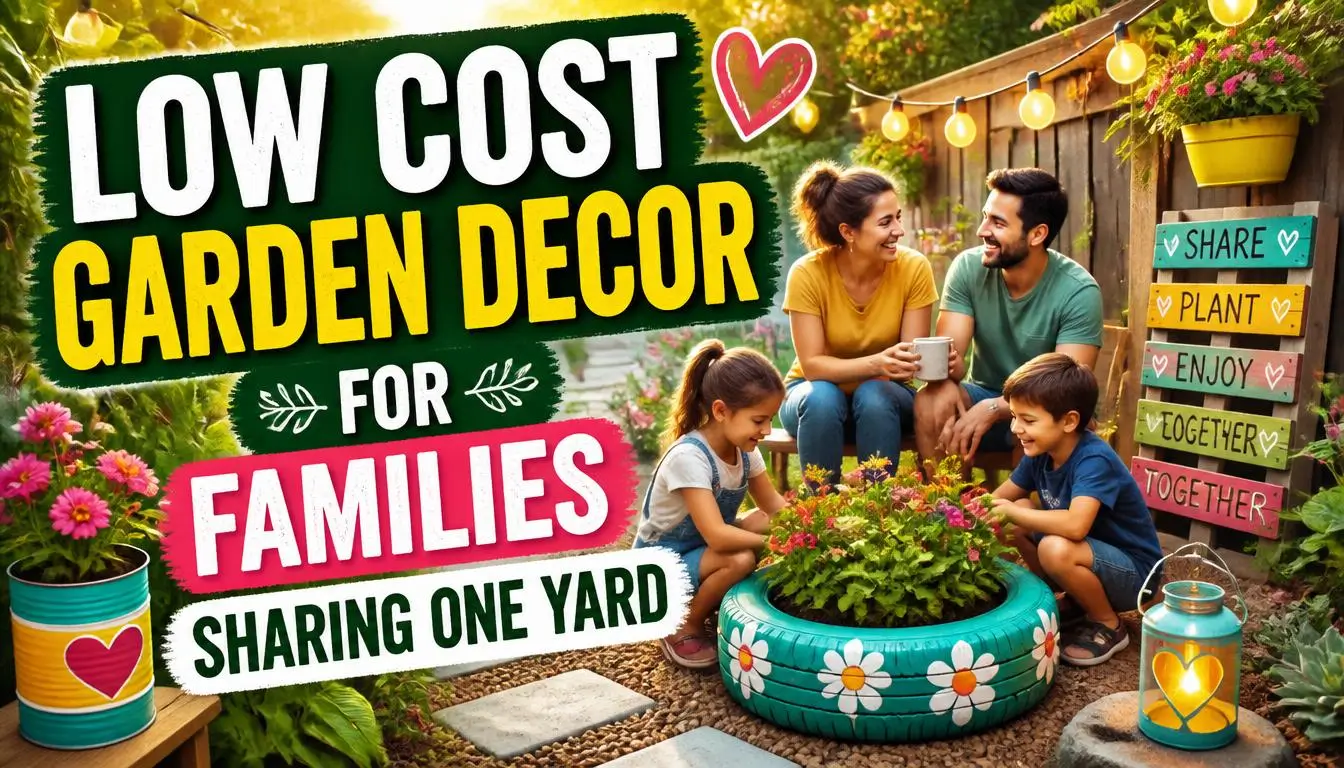
Low cost garden decor for families sharing one yard is one of those things you don’t think about until you’re living it. Maybe you’re in a duplex, a multi-generational home, or splitting outdoor space with another family entirely. Suddenly, the yard feels smaller, opinions multiply, and nobody wants to spend a fortune making it look nice. I’ve been there. My family shared a backyard with my in-laws for three years, and we figured out how to make it work beautifully without blowing our budget.
1. Create Personal Zones with Dollar Store Planters
Nothing says “this corner is mine” quite like a cluster of colorful planters. Dollar Tree and Dollar General carry surprisingly decent plastic and ceramic pots, and when you group five or six together with different heights, they look intentional rather than cheap.
We used mismatched Dollar Tree pots along the edge of our patio area and filled them with herbs and marigolds from seed packets that cost under $2 each. The other family did the same near their back door with succulents. It gave us both visual ownership of our sections without building a wall. Kids loved watering “their” plants, too.
2. DIY Painted Rock Borders
Painted rocks might sound like a Pinterest cliche, but they genuinely work as low cost garden decor for families sharing one yard. They define walkways, separate garden beds, and give every family member a chance to personalize something.
We spent one Saturday afternoon with acrylic paint from Walmart (about $7 for a multi-pack) and rocks we collected from a nearby creek. The kids painted ladybugs and smiley faces. The adults did simple patterns. We sealed them with a $4 can of clear spray sealant, and they lasted two full seasons before needing a touch-up. Free materials, minimal cost, maximum personality.
3. String Lights on a Shared Budget
If there’s one decor item that makes any yard feel magical for almost nothing, it’s outdoor string lights. A 48-foot strand of LED string lights from Amazon runs about $15 to $20, and splitting that cost between two families makes it painless.
We strung ours between a fence post and a shepherd’s hook we already had. The warm glow transformed the whole space at night. Both families enjoyed it equally, so there was zero conflict about the investment. Pro tip: go with solar-powered strands if your outlet situation is complicated. They cost roughly the same and eliminate the extension cord debate entirely.
4. Thrift Store Finds That Actually Hold Up
Goodwill and Habitat for Humanity ReStores are goldmines for outdoor decor. I’ve found ceramic garden stools for $5, wrought iron plant stands for $3, and once scored a gorgeous bird bath for $8 that would have been $60 at Lowe’s.
The key is knowing what survives outdoors. Metal, stone, and thick ceramic hold up well. Anything with particle board or thin wood veneer will fall apart after one rain. I check thrift stores about once a month and rarely leave empty-handed. When two families are pooling thrift store trips, you cover more ground and find better stuff. My mother-in-law found a set of solar path lights at a garage sale for $2, still in the box.
5. Pallet Furniture for Separate Seating Areas
Free pallets are everywhere, especially behind grocery stores and warehouses. With a basic sanding, some exterior stain or leftover house paint, and a few screws, you can build benches, side tables, or even a vertical garden planter wall.
Each family having their own seating area matters more than you’d think. Shared space works best when everyone has a spot that feels like theirs. We built a simple pallet bench with two stacked pallets and a plywood top for under $10 in materials. The other family preferred folding camp chairs, which was fine. The point is that both areas looked decorated and intentional without costing much at all.
6. A Shared Garden Bed with Assigned Rows
Planting a small vegetable or flower garden together is probably the best low cost garden decor move for families sharing one yard, because it builds cooperation while making the space beautiful. Raised bed kits from Home Depot start around $25, or you can frame one with cinder blocks for even less.
We split a 4×8 raised bed right down the middle. Our side had tomatoes and basil. Their side had peppers and zinnias. The flowers doubled as decor, and the vegetables kept everyone invested in maintaining the space. Seeds from Burpee or Ferry-Morse run $1 to $3 per packet. Even buying starter plants from a local nursery stays cheap when you split the soil and mulch costs.
7. Upcycled Container Gardens
Old wheelbarrows, rain boots, colanders, even a busted kitchen sink can become a planter. This kind of repurposed decor adds character you simply cannot buy at a big box store, and it costs next to nothing.
My neighbor had an old red wagon with a broken handle sitting in their garage. We drilled drainage holes in the bottom, filled it with potting mix, and planted trailing petunias. It became the centerpiece of the whole yard. People walking by actually stopped to compliment it. The total cost was $6 for a flat of petunias from Aldi’s garden section during spring. That’s the kind of payoff you want from yard decor.
8. Wind Chimes and Hanging Decor from Craft Supplies
A few handmade wind chimes or hanging ornaments add vertical interest to a yard without taking up any ground space, which really matters when square footage is limited. You can make surprisingly pretty chimes from old silverware, beads, and fishing line.
We made ours using mismatched spoons from the thrift store ($0.25 each), some wooden beads from a Michaels clearance bin, and monofilament fishing line. Total cost was maybe $3. They hung from a tree branch right in the center of the yard, a piece of decor both families could enjoy without it “belonging” to either side. Shared decor in neutral zones keeps the peace better than you’d expect.
9. Mulch and Edging for an Instant Upgrade
Here’s something people overlook: a clean edge and fresh mulch make any yard look ten times better immediately. It’s not flashy decor, but it’s the foundation that makes everything else pop. A bag of brown mulch at Home Depot costs about $3.50 for two cubic feet.
When we cleaned up the shared garden beds and added uniform mulch, the entire yard looked like someone actually cared about it. We used a flat-edge shovel to cut clean lines along the beds, no fancy edging tool needed. Both families pitched in about $15 each, and the result looked like a $500 landscaping job. Sometimes the cheapest upgrade is simply making what’s already there look tidy.
10. Coordinated Color Themes Without Matching Everything
When multiple families decorate one yard, visual chaos is a real risk. One side has neon pink flamingos, the other has rustic farmhouse lanterns, and the whole yard looks like a yard sale. A simple fix is agreeing on two or three accent colors.
We loosely agreed on warm tones: terracotta, yellow, and green. It didn’t mean everything matched perfectly, but there was a visual thread connecting both sides of the yard. My mother-in-law bought yellow cushions for her patio chairs, and we used terracotta pots. The yard felt cohesive rather than chaotic. This costs nothing extra, just a quick conversation before anyone buys anything new.
How to Handle Shared Decor Decisions Without Drama
This part isn’t about products. It’s about people. Sharing a yard means sharing opinions, and those don’t always align. We learned to keep a few simple ground rules that saved us from tension.
First, each family gets full control over the area directly outside their door, about a 10-foot radius. No input from the other side. Second, anything placed in shared or central areas gets a quick conversation first. Not a formal meeting, just a text like “Hey, I found a cute birdbath, cool if I put it by the tree?” Third, seasonal decor rotates. One family handles spring and summer decorating for the common areas, the other takes fall and winter. Fair, simple, and nobody feels steamrolled.
Low Cost Garden Decor for Families: Seasonal Swap Ideas
Seasonal swaps keep the yard feeling fresh without buying entirely new decor every few months. In spring, we’d swap in bright annuals and pastel pot covers. Summer meant the string lights stayed on later and we added citronella candles in mason jars (a two-for-one, decor and mosquito defense).
Fall was the other family’s time to shine, and they went all-in with hay bales from a local farm ($5 each), pumpkins from Aldi ($3), and a homemade scarecrow the kids built from old clothes. Winter got simple: a few solar-powered pathway lights and a small wreath on the shared gate. The rotation meant neither family carried all the effort or cost, and the yard always had something new to look at.
Frequently Asked Questions
How do you split the cost of shared yard decor fairly?
We kept it simple. Each family set a small monthly budget, usually $10 to $15, for shared areas. Personal zone decor was each family’s own expense. For bigger purchases like mulch or a raised bed kit, we split the receipt right down the middle. A shared Venmo or cash jar works great for keeping things transparent and stress-free.
What’s the best low cost garden decor for families with small children?
Anything durable and non-breakable. Painted rocks, rubber or plastic planters, and fabric bunting are all kid-proof options. We avoided ceramic pieces in areas where the kids played. Stepping stone kits from craft stores are another winner because the kids can make them and feel ownership over the yard, which means they’re actually less likely to destroy things.
Can renters use these ideas in a shared yard?
Absolutely. Most of these ideas are portable and leave no permanent marks. Potted plants, string lights on shepherd’s hooks, and painted rocks can all move with you. Just avoid digging permanent beds or drilling into shared structures without your landlord’s written permission. Stick to freestanding, removable decor and you’ll have zero issues when your lease ends.
How do you keep a shared yard looking cohesive?
Pick two or three accent colors everyone agrees on and stick to those loosely. It doesn’t need to be matchy-matchy, just in the same general family of tones. Also, keeping things tidy matters more than any single decor piece. Clean edges, fresh mulch, and swept pathways make even mismatched decor look intentional and pulled together.
Where do you find the cheapest garden decor supplies?
Dollar Tree, Aldi’s seasonal section, Walmart’s garden clearance endcaps, and Facebook Marketplace are my top four. Thrift stores like Goodwill are hit or miss but occasionally incredible. End-of-season sales at Home Depot and Lowe’s (usually late August and late October) slash prices 50 to 75 percent on everything from planters to solar lights.
Conclusion
Sharing a yard doesn’t have to mean settling for a boring or cluttered outdoor space. With a little creativity, some honest conversations, and a willingness to get your hands dirty on a weekend, two families can build a yard that feels welcoming for everyone. What’s the best shared-space hack you’ve tried?