
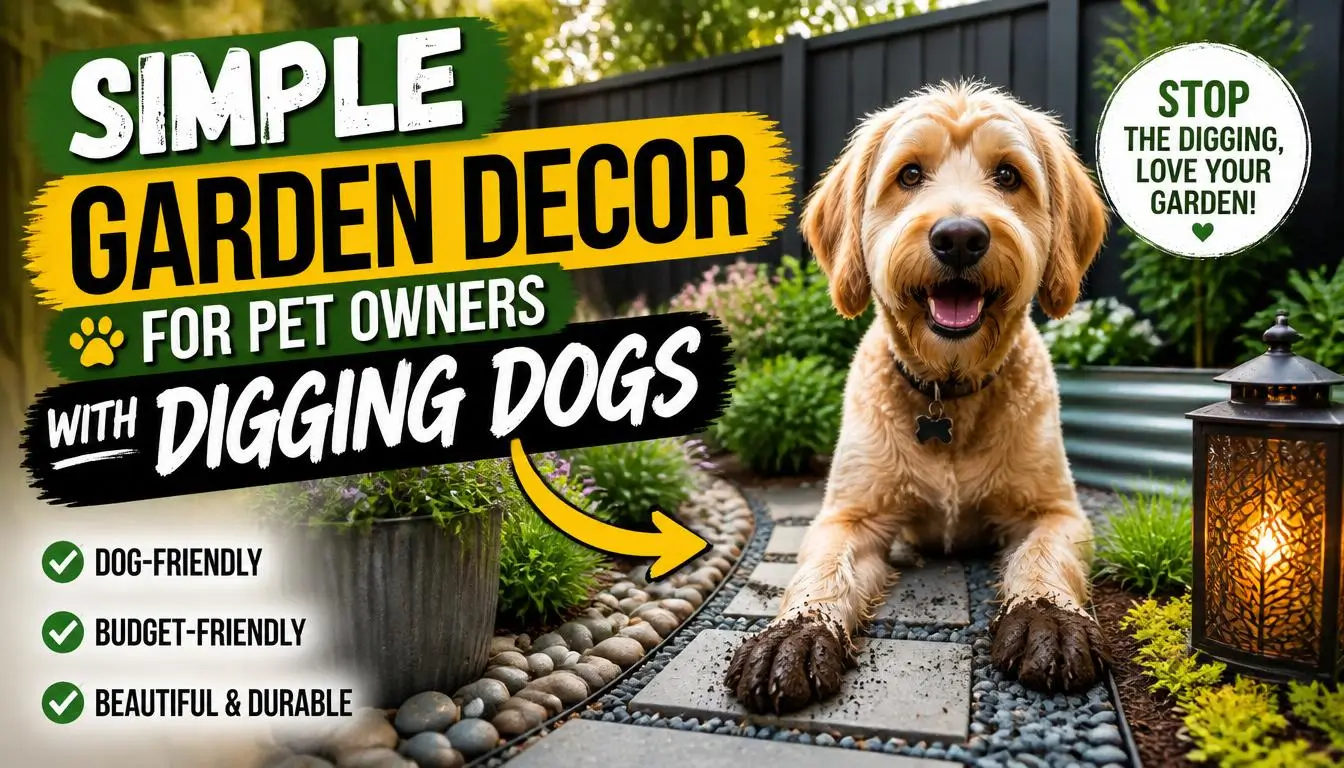
If you’ve ever spent a weekend perfecting your garden only to watch your dog crater it like a tiny bulldozer by Monday, you already know the frustration. Finding simple garden decor for pet owners with digging dogs feels like solving a puzzle where one piece keeps eating the others. I’ve lived this cycle for years with my two terrier mixes, and I’ve finally landed on what actually works. These aren’t Pinterest fantasies. They’re battle-tested ideas from someone whose backyard has seen war.
1. Heavy Stone Planters That Dogs Can’t Tip
Lightweight plastic pots are basically chew toys with flowers in them. After my dog knocked over three in one afternoon, I switched to heavy stone and concrete planters. They sit flat, they don’t budge, and dogs lose interest quickly when they can’t move them.
I picked up a pair of cast concrete planters from a local garden center for about $40 each. They weigh around 50 pounds empty, and once you fill them with soil, they’re not going anywhere. Place them on a patio or gravel pad rather than soft soil, and your dog won’t even try to dig around the base. Bonus: they look way better than plastic and age beautifully over time.
2. Raised Garden Beds With Built-In Borders
Raised beds are honestly the single best investment I’ve made. Dogs dig at ground level, so lifting your plants 18 to 24 inches off the ground solves most of the problem immediately. My dogs sniff around the edges but never jump in.
I built mine using cedar planks from Home Depot, but you can also buy pre-made kits from Vego Garden or Birdies. The key detail most people miss is adding a layer of hardware cloth (metal mesh) at the bottom of the bed before filling with soil. This prevents any determined digger from tunneling up underneath. Cedar naturally resists rot, so these beds last for years without treatment or chemicals that could harm your pets.
3. River Rock Ground Cover Instead of Mulch
Mulch is basically an invitation for a digging dog to party. It’s soft, it’s loose, it flies everywhere, and dogs seem to think it smells amazing. River rock changed everything for me. It’s heavy enough that dogs can’t fling it around, and it doesn’t feel rewarding to dig through.
I laid down landscape fabric first, then spread 2 to 3 inches of medium-sized river rock over the top. The fabric keeps weeds from coming through, and the rock stays put. My dogs walked over it a few times, lost interest, and moved on. You can find river rock in bulk at most landscape supply yards for about $40 to $60 per ton, which covers more area than you’d expect. It looks clean and polished, especially around pathways and garden borders.
Simple Garden Decor for Pet Owners With Digging Dogs: Metal Art and Sculptures
Here’s something I didn’t expect to work so well. Metal garden art, think sculptural stakes, iron animals, spinning wind catchers, adds personality without giving your dog anything to destroy. My dog has zero interest in a metal heron standing by the fence, but he would absolutely shred a fabric garden flag.
I found a great set of rusted metal yard stakes on Etsy for under $30. They push deep into the ground, stand about 3 feet tall, and look like they belong in a cottage garden. Wind spinners from Gardener’s Supply Company are another solid pick. They move and catch light, which actually keeps some dogs entertained without encouraging digging. Just make sure any metal decor has smooth edges and no small pieces that could break off.
4. Pea Gravel Pathways That Look Great and Survive Dogs
Stepping stones surrounded by soft dirt are basically a dog’s treasure map. My solution was pea gravel pathways with a solid edge border. The gravel is small and uncomfortable enough under paws that my dogs naturally avoid walking through it, but it looks gorgeous as a garden feature.
I used steel landscape edging from Col-Met to create clean lines, then filled the pathways with about 3 inches of pea gravel over compacted base material. The total cost for a 20-foot path was around $80, and it took me one Saturday to install. Pea gravel drains well, doesn’t get muddy, and gives your garden that French countryside feel. If your dog does walk through it, nothing gets damaged anyway.
5. Hanging Planters and Wall-Mounted Pots
When ground-level gardening became a warzone, I went vertical. Hanging planters from shepherd’s hooks and wall-mounted pots on the fence completely changed my yard. My dogs can’t reach them, can’t dig around them, and honestly don’t even notice them.
I use Mkono macrame hangers with simple terracotta pots for herbs and trailing flowers like petunias and sweet potato vine. For the fence, I mounted half-round metal planters from Panacea Products using basic screws. They hold up in rain and wind, and they add color at eye level instead of ground level. Vertical gardening is honestly the cheat code for anyone dealing with a persistent digger. You get all the beauty with none of the destruction.
6. Designated Digging Zones With Buried Toys
This one sounds counterintuitive, but hear me out. If your dog loves to dig, giving them a specific spot to do it actually protects the rest of your garden. I created a small sandbox-style digging zone in a back corner of the yard using landscape timbers and play sand.
I buried a few old toys and treats just below the surface to teach my dogs that this was their spot. Within about two weeks, they started going to the dig zone instead of my flower beds. It cost less than $30 to set up. You can even decorate around it with those heavy stone planters or metal art so it blends into your garden’s look rather than sticking out like a kiddie sandbox. Training and decor working together, that’s the sweet spot.
7. Concrete Stepping Stones With Personality
Forget delicate mosaic tiles or thin resin stones. Thick concrete stepping stones are dog-proof, affordable, and actually fun to customize. I made my own by pouring quick-set concrete into silicone molds from Amazon, and I pressed a few paw prints into them before they dried.
Each stone cost about $3 to make, and they’re nearly indestructible. You can also buy pre-made decorative concrete stones at Lowe’s for around $5 to $8 each. Set them into compacted gravel or firmly into the ground so they don’t wobble, and your dog won’t care about them at all. They add structure and charm to any garden path, and they survive everything, rain, frost, and even the most enthusiastic 60-pound digger.
8. Tough Ornamental Grasses Instead of Delicate Flowers
Delicate annuals don’t last a week in a yard with digging dogs. I learned this the expensive way after replanting impatiens four times in one season. Ornamental grasses, on the other hand, are incredibly tough and look fantastic swaying in the breeze.
I planted Karl Foerster feather reed grass and blue fescue along my fence line, and my dogs haven’t touched them. Grasses have deep, dense root systems that resist digging, and they bounce back even if a dog runs through them. They also add texture, movement, and height to your garden without requiring much maintenance. Most varieties are drought-tolerant too, so you spend less time watering and more time actually enjoying your yard. Plant them in clusters of three or five for the most natural look.
9. Solar Stake Lights for Nighttime Charm
Solar stake lights are one of those simple additions that make your garden feel finished. They’re inexpensive, easy to install, and surprisingly dog-resistant if you buy the right ones. I went through two sets of cheap plastic ones before switching to stainless steel solar path lights from Solpex, and they’ve survived over a year of dog chaos.
Push them into firm ground or alongside gravel paths where the soil is compacted. They cast a warm glow at night that makes even a modest garden look polished. My dogs bumped into them a few times early on but quickly learned to avoid them. At around $20 for a set of 12, they’re one of the cheapest ways to add real atmosphere to a dog-friendly yard. Just avoid the delicate glass globe styles, those won’t last a week.
10. Window Boxes for Curbside Appeal
If your front or back of the house has windows facing the garden, window boxes give you color and life completely out of your dog’s reach. I installed two 36-inch cedar window boxes under my kitchen windows, filled them with geraniums and trailing ivy, and they’ve been untouched for three seasons.
You can find pre-made window boxes at almost any hardware store. I like the ones from Hooks & Lattice because they include mounting brackets and drainage holes. Plant with trailing varieties that spill over the edge for the most visual impact. FYI, window boxes do need more frequent watering than in-ground plants because they dry out faster. But the trade-off is worth it when everything at ground level gets excavated regularly.
Frequently Asked Questions
What kind of garden decor survives dogs that dig constantly?
Heavy, anchored, and elevated options hold up best. Think concrete planters, metal garden art, raised beds, and hanging pots. Anything lightweight, fragile, or sitting on loose soil is going to get destroyed eventually. The goal is choosing pieces that either sit out of reach or feel unrewarding for a dog to interact with.
Are there dog-safe plants that resist digging damage?
Ornamental grasses like blue fescue and feather reed grass have deep root systems that survive digging. Lavender and rosemary are also tough and naturally unappealing to most dogs because of their strong scent. Always double-check any plant against the ASPCA’s toxic plant database before adding it to a yard where pets roam freely.
How do I stop my dog from digging in flower beds?
A designated digging zone works wonders. Create a small sandbox area with buried toys so your dog has an approved outlet. Combine that with physical barriers like raised beds or rock borders around your flower beds. Training takes consistency, but most dogs redirect within a couple of weeks when given a better option.
Does simple garden decor for pet owners with digging dogs have to look boring?
Absolutely not. Metal sculptures, colorful hanging planters, solar lights, and textured gravel pathways all look fantastic. The trick is choosing materials that are durable rather than delicate. Some of the most beautiful gardens I’ve seen belong to dog owners who got creative with heavy planters and vertical gardening. Dog-proof and gorgeous can coexist.
Is river rock or pea gravel better for a dog-friendly garden?
Both work well, but for different purposes. River rock is heavier and better for ground cover in garden beds because dogs can’t scatter it easily. Pea gravel is ideal for pathways because it compacts well and drains quickly. IMO, using both in different areas gives you the most functional and visually interesting yard.
How much does it cost to make a garden dog-proof?
You can make significant improvements for under $200 if you focus on a few key changes. A raised bed kit runs $60 to $150, river rock costs $40 to $60 per ton in bulk, and metal garden art or solar lights come in under $30. Start with whichever area your dog targets most and expand from there.
Conclusion
Living with digging dogs doesn’t mean giving up on having a beautiful outdoor space. It just means choosing smarter materials and placing things where four-legged demolition crews can’t reach. Which of these ideas are you going to try first in your yard?