
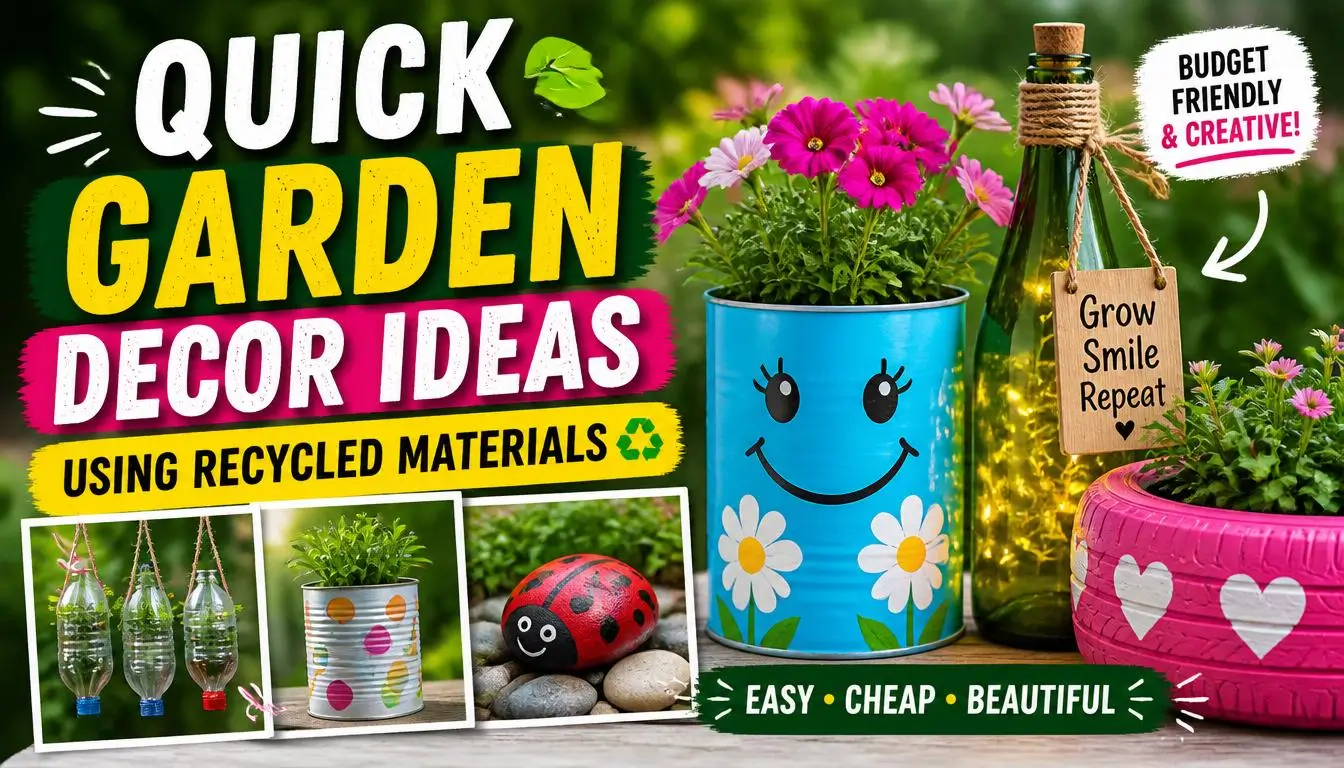
If you’ve ever stared at your backyard and thought “this needs something” but your wallet said absolutely not, you’re my people. These quick garden decor ideas for people using recycled materials came straight out of my own garage cleanouts, recycling bin raids, and a stubborn refusal to spend money at big box stores. Every single project here uses stuff you probably already own. Most take under an hour. Some look like they cost serious money. They didn’t.
1. Tin Can Herb Planters
Old soup cans, coffee cans, even those big tomato sauce cans work perfectly. I hammered a few drainage holes in the bottom, spray painted them with leftover Rust-Oleum, and screwed them onto a salvaged wooden plank from a broken shelf.
Hang the plank on a fence or prop it against a wall, and suddenly you’ve got a vertical herb garden. Basil, cilantro, and chives all thrive in these. The paint holds up surprisingly well through rain if you use the outdoor formula. I’ve had mine outside for two full growing seasons now.
2. Wine Bottle Border Edging
My neighbor literally asked me where I “bought” this. I buried empty wine bottles upside down along my flower bed, neck first, leaving about four inches of the base above soil level. The glass catches sunlight and throws little reflections across the garden.
Green bottles look the most natural, but mixing colors creates a mosaic effect that really pops. Dig a trench about six inches deep, pack the soil tight around each bottle, and they stay put even in heavy storms. I’ve used maybe 30 bottles total along one path, and it took about 45 minutes.
3. Pallet Wood Plant Shelf
A discarded shipping pallet becomes a rustic plant display with almost zero effort. I leaned one against my back fence, sanded the roughest spots so I wouldn’t get splinters every time I touched it, and set small potted plants on the slats.
If you want to get fancy, use a staple gun to attach landscaping fabric to the back and fill the gaps with soil. Then plant succulents or strawberries directly into the pallet. IKEA parking lots, hardware stores, and Craigslist “free” sections are goldmines for pallets. Just make sure you grab heat-treated ones (stamped “HT”) since chemically treated pallets aren’t safe for gardens.
4. Old Tire Planters
I know, I know. Tire planters can look tacky. But hear me out. Stack two or three tires, paint them a single bold color, fill them with potting soil, and plant trailing flowers like petunias or sweet potato vine. The trailing greenery hides the tire shape within weeks.
I painted mine matte black using regular exterior latex paint, and people genuinely think they’re some kind of modern planter I ordered online. The rubber insulates roots really well, so plants actually grow faster in these than in standard pots. One tire, one can of paint, done. Total cost was about four bucks.
5. Mason Jar Lanterns
Those old canning jars collecting dust in your pantry are perfect for outdoor lighting. I wrapped copper wire (stripped from an old extension cord that was beyond saving) around the jar rims to create handles, dropped in battery-operated tea lights from Dollar Tree, and hung them from shepherd’s hooks along my garden path.
At dusk, the effect is honestly magical. The glass diffuses the light perfectly. You can tint the jars by mixing Mod Podge with a few drops of food coloring and painting the inside. Blue and amber look incredible. Each one takes maybe five minutes to make.
6. Broken Dish Mosaic Stepping Stones
Remember that plate you dropped last Thanksgiving? Don’t throw the pieces away. Mix up some quick-set concrete in a pie tin or shallow container, press the broken ceramic shards into the surface in a pattern, and let it cure for 24 hours.
I’ve made about a dozen of these using chipped mugs, cracked tiles from a bathroom remodel, and even broken terracotta pots. Quikrete’s quick-setting mix from Home Depot works perfectly and costs around five dollars per bag, which makes several stones. Wear gloves when handling the sharp edges. I learned that lesson the messy way.
Quick Garden Decor Ideas for People Using Recycled Materials: Beyond the Basics
Once you get hooked on making garden art from trash (and you will), you start seeing potential everywhere. That rusted colander becomes a hanging planter with built-in drainage. A cracked teapot tips sideways in a flower bed and “pours” a stream of planted ground cover. An old wooden ladder leans against a tree and holds cascading pots on every rung.
I turned a broken wheelbarrow into a statement planter last spring. Drilled holes in the bottom, filled it with soil and a mix of zinnias and marigolds, and wheeled it into the middle of my front yard. Three different neighbors stopped to compliment it. The wheelbarrow had been rusting behind my shed for two years doing absolutely nothing.
The trick with all of these projects is restraint. Pick three or four pieces that complement each other instead of cramming every recycled creation into one small space. A curated look beats a cluttered one every time.
7. Plastic Bottle Vertical Garden
Two-liter soda bottles make surprisingly effective vertical planters. Cut a rectangular opening on one side, poke drainage holes on the opposite side, fill with soil, and attach them to a fence or wall using screws through the bottle cap area.
I lined eight of these along my back fence and planted lettuce, spinach, and small herbs. The clear plastic acts like a mini greenhouse. Plants sprouted faster than in my raised bed, which honestly annoyed me a little. Spray paint the bottles first if you want a cleaner look. Matte white or sage green blends right in.
8. Old Chair Planter
Thrift stores practically give away chairs with broken seats. I found a wooden dining chair for two dollars at Goodwill, knocked out the seat, set a pot inside the opening, and planted trailing ivy. It sits in the corner of my patio and looks like something from a garden magazine.
Paint it a fun color or leave the natural wood for a rustic vibe. I went with a pale yellow, which pops against the green foliage. Sand it lightly before painting so the finish actually sticks. These make great conversation pieces, and guests always want to know where I “found” it.
9. CD/DVD Garden Spinners
Scratched DVDs and old CDs are practically worthless now, but they make fantastic light spinners in the garden. I tied fishing line through the center holes and hung them from tree branches around my vegetable garden.
The reflective surface catches sunlight and creates spinning flashes that genuinely help deter birds from eating my tomatoes and berries. I hung about fifteen across a small area. On a sunny day, the whole garden sparkles. It looks intentional and artsy, not like I just hung trash in a tree. Two birds, one stone, except the actual birds stay away.
10. Egg Carton Seed Starters That Become Decor
Cardboard egg cartons make perfect biodegradable seed starters. Fill each cup with potting soil, plant your seeds, water gently, and set them on a windowsill. Once seedlings sprout, you can transplant the whole cup directly into the garden since the cardboard decomposes naturally.
I arrange my started seedlings in vintage wooden crates on my porch railing. The combination of the weathered crate and the bright green sprouts poking out of egg carton cups looks intentionally farmhouse-chic. It doubles as living decor while your plants get established. I start dozens of seedlings this way every March and the whole porch looks alive.
Tips for Making Recycled Garden Decor That Actually Lasts
Not every recycled material survives outdoor conditions. I’ve had projects fall apart after one rainstorm because I skipped a few basics. Here’s what I’ve learned the hard way.
Seal any wood with polyurethane or exterior wood stain, even if it’s a pallet you don’t care about. Untreated wood rots within one season. Metal items need a clear coat or rust-resistant spray, otherwise they’ll disintegrate by August. Avoid using materials that leach chemicals near edible plants, specifically painted items from before 1978, pressure-treated lumber, or tires for growing food.
Gorilla Glue and marine-grade adhesives hold up outside. Standard craft glue does not. I’ve reglued the same mosaic stones three times before switching to a proper outdoor adhesive.
Frequently Asked Questions
Are recycled materials safe to use in a garden?
Most household recyclables are perfectly safe for ornamental garden use. Avoid anything with lead paint or unknown chemical treatments near food-growing areas. Stick to glass, untreated wood, food-grade plastics, and clean metals. When in doubt, use the recycled piece as a decorative element rather than a direct planting container for vegetables or herbs.
What are the easiest quick garden decor ideas for people using recycled materials?
Tin can planters and wine bottle edging are the simplest starting points. Both require almost no tools, cost nothing beyond a little paint, and take under 30 minutes. They also look polished enough that nobody would guess they started as trash. I recommend these two for anyone trying recycled garden projects for the first time.
How do I keep recycled garden decor from looking messy?
Stick to a consistent color palette across your projects. If you paint three tin cans, one tire planter, and a chair, use the same two or three colors. Group similar items together rather than scattering everything randomly. A cohesive theme is the difference between “creative garden” and “junkyard chic.”
Do I need special tools for these projects?
A hammer, a drill with a basic bit set, exterior spray paint, and outdoor adhesive cover about 90% of recycled garden projects. Sandpaper and wire cutters help for specific builds. You probably own most of these already. Nothing on this list requires a workshop or power tools beyond a basic drill.
How long do recycled garden decorations typically last?
With proper sealing and weatherproofing, most projects last two to four seasons easily. Glass items like bottle borders and jar lanterns last indefinitely. Metal and wood pieces need occasional touch-up coats. I refresh my tin can planters with a quick spray paint layer every spring, which takes about ten minutes total.
Conclusion
Your recycling bin and your garden have more in common than you think, and honestly, some of my favorite outdoor pieces started as things I almost threw away. Pick one idea from this list this weekend and just try it. What’s the most creative thing you’ve ever repurposed for your yard?